Product ways of working
Problem: Each squad within the product team had a different process within ways of working. This inconsistency was causing friction between teams, misalignment on project goals and confusion between designers working on multiple projects.
Role: Strategy
Duration: 2 Weeks
Challenges
Sykes UX and product team went through rapid expansion in the past year, as a result there was an initiative to move the designers from assigned squads to broader tribes. The goal being that it would enable designers to work on multiple products to ensure we didn’t have a single point of knowledge and also to be able to give priority resource to larger initiatives.
Process mapping
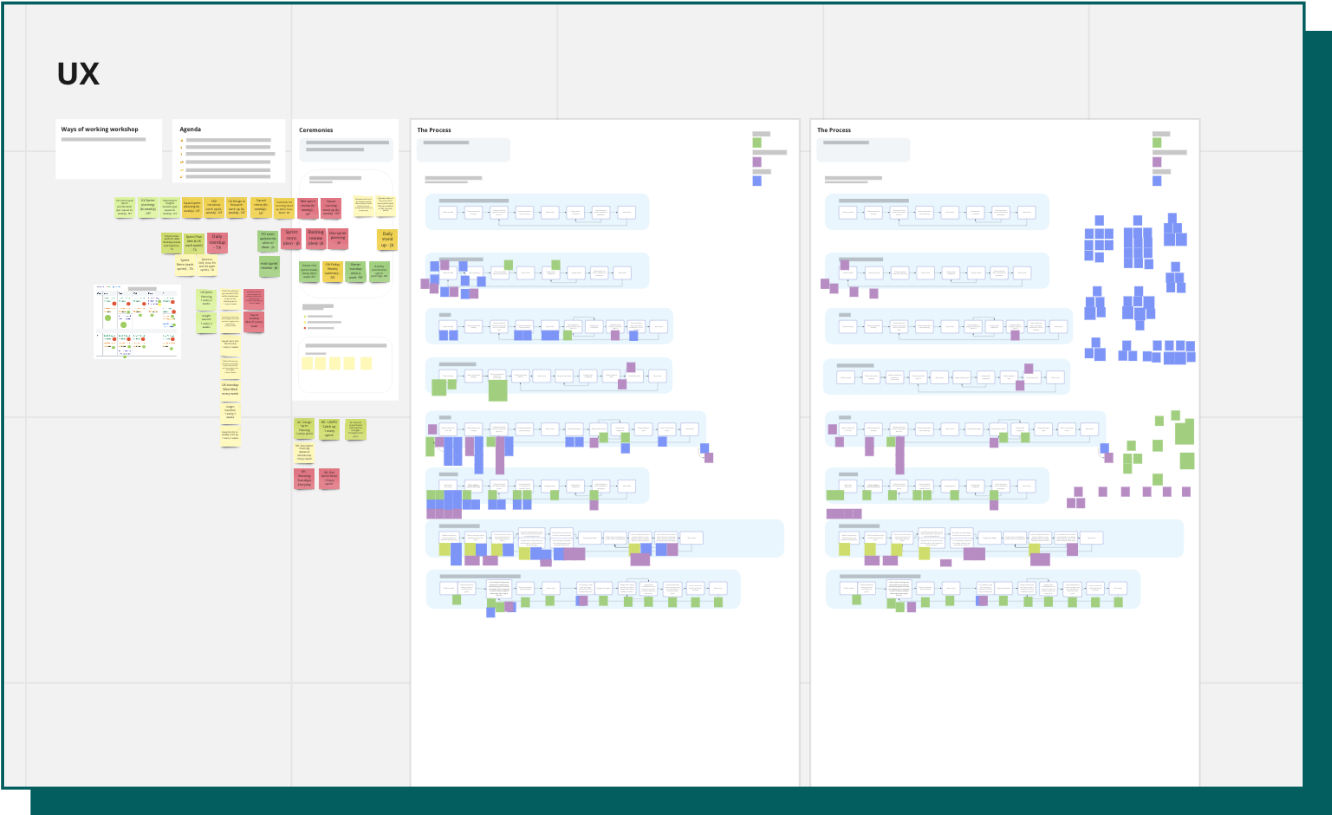
Our approach was to run two workshops separately with UX and Product Owners to define and understand their current processes and areas of opportunity.
Within this workshop, we gained an understanding of what works well, areas of opportunity and pain points for both designers and product owners.
We also took the opportunity to outline current ceremonies to identify where there were opportunities to improve efficiency.
Process
Our approach was to run two workshops separately with UX and Product Owners to define and understand their current processes and areas of opportunity.
Within this workshop, we gained an understanding of what works well, areas of opportunity and pain points for both designers and product owners.
We also took the opportunity to outline current ceremonies to identify where there were opportunities to improve efficiency.
Process
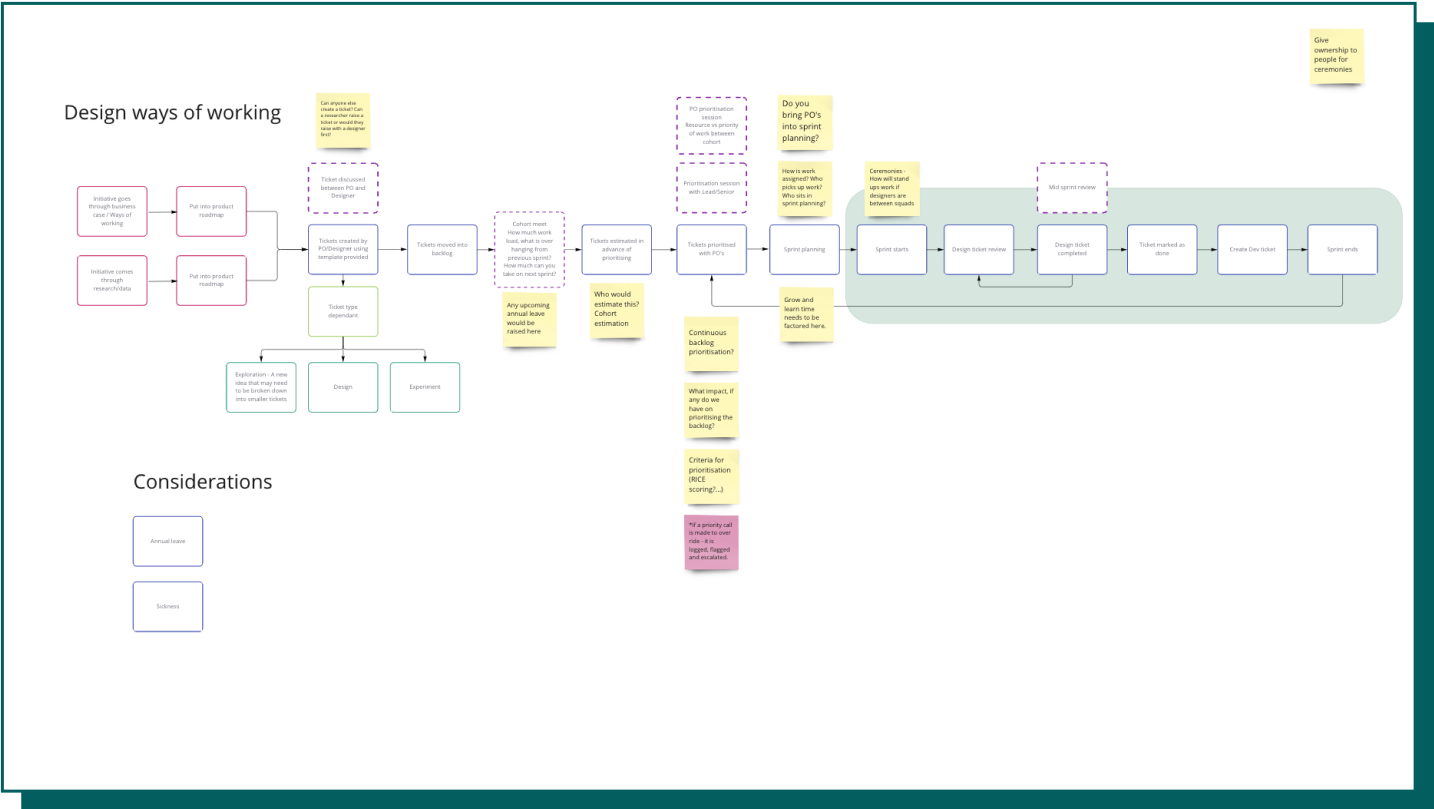
Once we had satisfied feedback and areas of opportunity, we played back to wider teams for feedback and consideration.
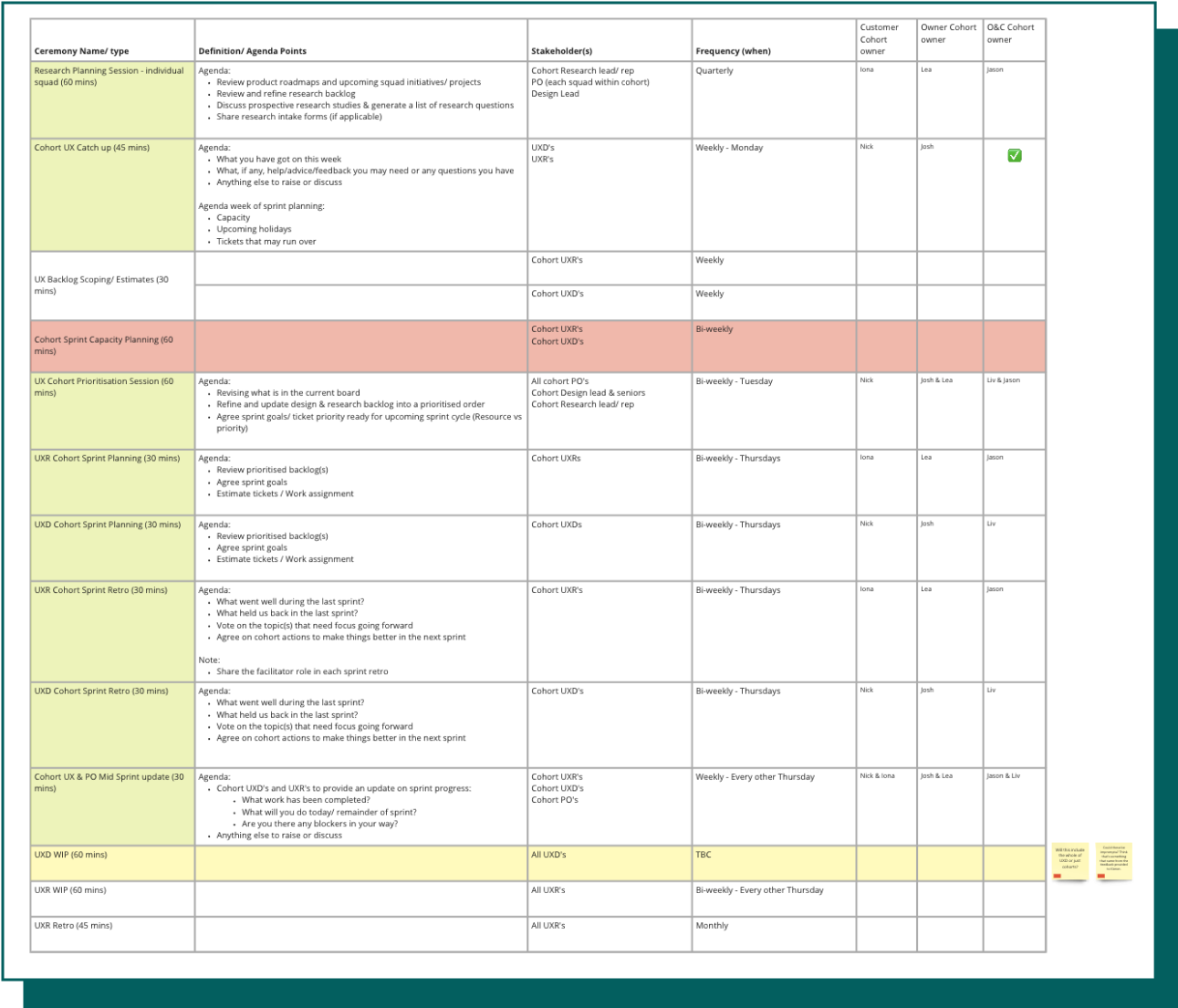
Also using this opportunity to introduce consolidated and considered ceremonies with detailed agendas.
Learnings & next steps
Once we had set up dedicated time to play the new process back to all relevant stakeholders and out into the wider product team, we have set up space for continual feedback.
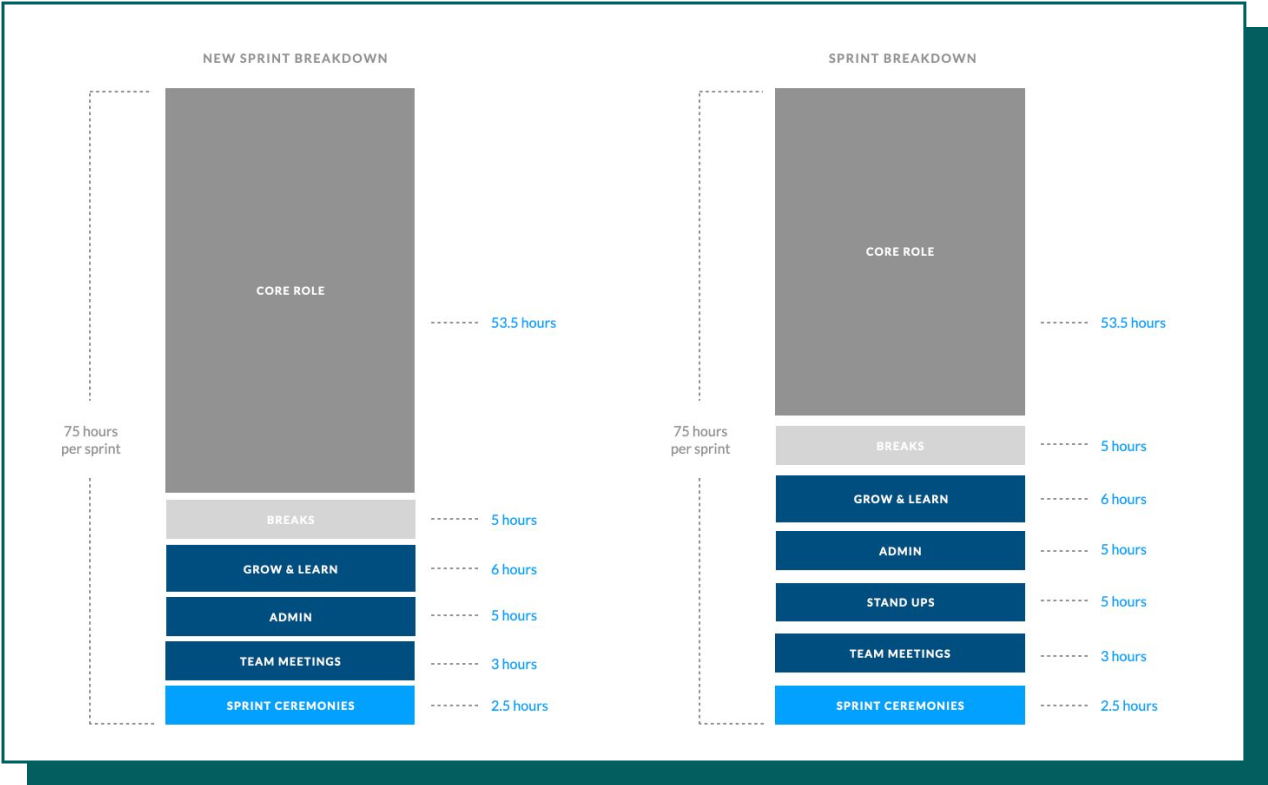
As a by-product of the new ways of working, we saved designers 6.6% (or 5 hours) of time in every sprint, now available for them to attribute to their core role